
Sole traders
Self Employed Tax Calculator UK 2026/27
Loading calculator…
✓ Rates checked against HMRC for 2026/27. Free to use. Nothing you type leaves your device.
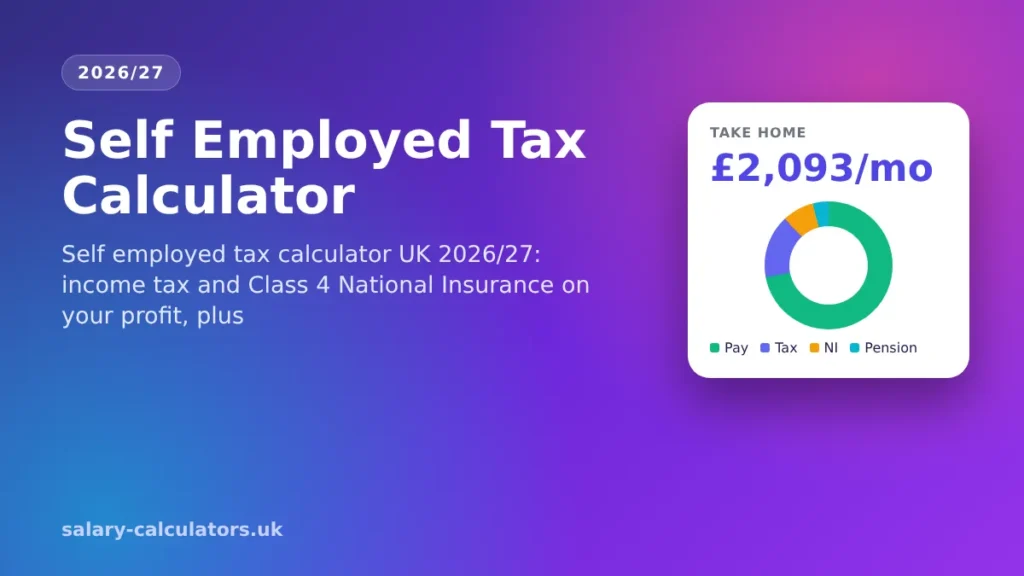
This self employed tax calculator shows the income tax and Class 4 National Insurance due on your sole trader profit for 2026/27, and what you keep.
Quick answer: Sole traders pay income tax at the same rates as employees, plus Class 4 National Insurance of 6% on profits between £12,570 and £50,270 and 2% above. Class 2 is no longer compulsory.
Class 4 National Insurance 2026/27
| Profit | Class 4 rate |
|---|---|
| Up to £12,570 | 0% |
| £12,571 to £50,270 | 6% |
| Over £50,270 | 2% |
Class 2 National Insurance is no longer charged. If your profits are below the Small Profits Threshold (£7,105 in 2026/27) you can pay voluntary Class 2 of £3.65 a week to protect your State Pension record.
Paying your tax
Self employed people pay through Self Assessment. The deadline to file online and pay for 2026/27 is 31 January 2028. If your bill is over £1,000 you may also make payments on account towards next year.
“Self employed? Class 4 NI is 6% on profit between £12,570 and £50,270 in 2026/27.”
Share on X“Tax for sole traders is worked out on profit, not turnover.”
Share on X
Worked example: £40,000 profit
| Step | Amount |
|---|---|
| Profit | £40,000 |
| Income tax | £5,486.00 |
| Class 4 NI (6% from £12,570) | £1,645.80 |
| Take home | £32,868.20 |
Class 4 is 6% compared with 8% employee NI, so a sole trader keeps a little more than an employee on the same figure.
Who this calculator is for
- Sole traders and freelancers.
- People with side income from self employment.
- Anyone filing Self Assessment.
Self employed vs employed
| On £40,000 | Employed | Self employed |
|---|---|---|
| Income tax | £5,486.00 | £5,486.00 |
| National Insurance | £2,194.40 (Class 1, 8%) | £1,645.80 (Class 4, 6%) |
| Take home | £32,319.60 | £32,868.20 |
Self employed people keep a little more because Class 4 NI is lower, but they have no holiday pay, sick pay or employer pension. Compare net figures carefully.
Self employed in Scotland
Scottish income tax bands apply to self employed profits too. Class 4 NI is the same across the UK.
How do I calculate my self employed profit?
Profit = income minus allowable expenses. You can claim the £1,000 trading allowance instead of expenses if your costs are low.
Self employed take home by profit
| Profit | Income tax | Class 4 NI | Take home |
|---|---|---|---|
| £15,000 | £486 | £146 | £14,368 |
| £25,000 | £2,486 | £746 | £21,768 |
| £35,000 | £4,486 | £1,346 | £29,168 |
| £50,000 | £7,486 | £2,246 | £40,268 |
| £70,000 | £15,432 | £2,657 | £51,911 |
| £100,000 | £27,432 | £3,257 | £69,311 |
To calculate tax on your self employed profit, use the calculator above. It shows the net figure you can compare with an employed salary.
Payments on account
If your Self Assessment bill is over £1,000, HMRC usually asks for two payments on account towards next year, each half of this year’s bill, due 31 January and 31 July. Plan your cash flow so the first January bill does not come as a shock.
Keeping records
Keep invoices, receipts and bank statements for at least 5 years after the 31 January filing deadline. Making Tax Digital for Income Tax starts from April 2026 for sole traders with income over £50,000.
More questions answered
Do I pay National Insurance if my profit is small?
You pay no Class 4 below £12,570 profit. Below the Small Profits Threshold you can pay voluntary Class 2 to protect your State Pension.
Can I be employed and self employed?
Yes. Your salary uses your Personal Allowance first, so self employed profit may be taxed from the first pound.
Compare self employed vs employed take home
Use the comparison table above, or compare net figures with the main salary calculator.
Self employed FAQs
How do I calculate self employed tax?
Profit minus the Personal Allowance is taxed at 20%, 40% and 45% (Scottish bands in Scotland), plus Class 4 NI at 6% and 2%.
What expenses can I claim?
Costs used wholly for your business, such as equipment, software, travel for work and a share of home costs.
Can I use this for side income?
Yes, but add your employed salary in the main calculator first, because it uses your Personal Allowance.
Related calculators
- Salary and dividendsDirectors of a Ltd
- ContractorInside and outside IR35
- UK salary calculatorTake home pay after tax
- Student loanMonthly repayments
- Monthly salaryAnnual, monthly, weekly
- Pay rise calculatorWhat a raise is worth
Conclusion
This self employed tax calculator shows your 2026/27 income tax and Class 4 NI and what you keep from your profit.
Frequently asked questions
Can I deduct expenses?
Yes, allowable business expenses reduce your profit.
Do I need to register as self employed?
Yes, with HMRC once your trading income is over £1,000 a year.
How much tax do I pay when self employed?
Income tax at normal rates plus 6% Class 4 NI between £12,570 and £50,270 and 2% above.
Do I pay Class 2 NI?
No, it is no longer compulsory; it can be paid voluntarily.
When is the 2026/27 tax return due?
31 January 2028 for online returns.

I am ACCA part qualified (11 of 13 exams passed) with an MSc in Accounting, and I work in UK accounts on reconciliations, VAT returns and reporting. I build and check every calculator here against the official HMRC rates. LinkedIn